Devastating news broke in early October that the great Barry Melrose was diagnosed with Parkinson’s Disease and will be retiring from ESPN.
Barry is a certified legend in the world of hockey. He drew upon experience as a former NHLer and coach to deliver world-class analysis under the bright lights of television sets for the last three decades. He’s a steward for the game, a true leader in the sports media universe and a case study in charisma and kindness.
It’s terrible such a nasty disease finds it’s way to someone as energetic, witty and passionate as Barry. Just hard to comprehend.

“I’ve had over 50 extraordinary years playing, coaching and analyzing the world’s greatest game, hockey. It’s now time to hang up my skates and focus on my health, my family, including my supportive wife Cindy, and whatever comes next,” Melrose said in a statement.
“I’m beyond grateful for my hockey career, and to have called ESPN home for almost 30 years. Thanks for the incredible memories and I’ll now be cheering for you from the stands.”
ESPN
Dedicated To The Game
Of course, this isn’t meant to be obituary, rather a nod to his contributions to the sport and life in hockey. I can’t imagine he wants anyone dwelling over his health.
Barry’s prime was a bit before my time as a hockey fan. Although, the past few years I’ve been diving into hockey history and the very first book I read was “Dropping the Gloves” by Melrose himself.
In a conversational and casual style identical to his on-air personality, Barry walks the reader through his journey. The book opens with a powerful and heartfelt foreword from none other than Wayne Gretzky.
“Barry is one of the best coaches I ever played for. He and I had a meeting of the minds from day one. He never got on a guy’s case for being aggressively creative,” Gretzky wrote. “That was lucky for me.”
“As a coach, Barry treated every player on the team as an individual. He made it a point to know each guy inside and out. As a TV presenter, Barry brings great insight and good humor to our game. After reading this book, you’ll find yourself watching hockey more intently, with a deeper appreciation of what’s going on out there on the ice.”
Dropping The Gloves
Hailing from the Canadian province of Saskatchewan, Barry found himself on skates as early as he could walk. Every town in Saskatchewan has three things: a legion hall, a skating rink and a curling rink.
Growing up, Barry also played baseball and claims he was a better ball player than he was a hockey player. Although, baseball was only something to do when the rinks weren’t frozen and eventually, he hung up the cleats.
With the sole focus on hockey, Barry put on his hard hat and fought his way through the Canadian minor league system. He was drafted by the Montreal Canadiens, but ultimately took his talents to the World Hockey Association (WHA).
Reading about all the different leagues during that time period was super interesting. You had the Saskatchewan Junior Hockey League, the rough and tough Western Hockey League, the WHA and of course the NHL, where the intimating Philadelphia Flyers reigned supreme.
Barry described the 1970’s as the “Dark Ages”, with line brawls almost every night. It’s no surprise his analysis on ESPN was so poignant and fair, since he lived through that era and has payed close attention to the skill renaissance that’s followed. Without question, Barry is one of the game’s great historians with a perspective that’s unique to him and him only.
In Dropping The Gloves, Barry shares so many golden nuggets about the “game within the game”, as it relates to fighting and physicality. Absolutely worth the read to get the full picture.
“Back to the Dark Ages: there really is a line between intimidation and assault. There is good hard, physical hockey – courageous hockey – and there is a moment when all-out violence enters in,” Barry claims.
“If a player got suspended during the Dark Ages, then the guy he hit had to almost have died. People say today’s game is violent. The Dark Ages are beyond comparison for violence. In that era, intimidation qualified as a game plan. We’d actually go over the opposing lineup before the game and talk about who could be intimidated.”
Dropping The Gloves
Player Coach Before It Was Cool
As a coach, Barry was ahead of his time in the way he connected to players on a personal level. In 1992-1993, Barry first season behind the bench was with Wayne Gretzky’s Los Angeles Kings. Just before training camp, Barry received word Gretzky would be sidelined for the first several months of the season with a back injury. Barry was left scrambling to keep the team afloat and restructure the game plan.
Gretzky returned in February and Barry was able to fall back on the rapport he built with #99 before the season even began.
“The captain and the coach have to have a strong relationship,” Barry stated.
“I had a great relationship with Luc Robitaille in L.A., when he sat in for Gretzky. And when Gretzky returned and took the seat again, I had a great relationship with him.”
Dropping The Gloves
The team struggled initially, but Barry infused endless confidence in Gretzky despite naysayers spewing negativity in the media. Before long, Gretzky returned to his magical form of old and the Kings made a legendary run to the Stanley Cup Finals, with epic series wins against the Vancouver Canucks and Toronto Maple Leafs.

Gretzky claims the best hockey he ever played was against the Leafs in those playoffs, under Barry Melrose. #99 shared so many more anecdotes about that season and that team, during his most recent appearance on the Spittin’ Chiclets podcast.
Lights, Camera, Action
As an analyst and on television, Barry was an effortless entertainer. His suits, signature mullet and goatee were recognized and celebrated all over North America.
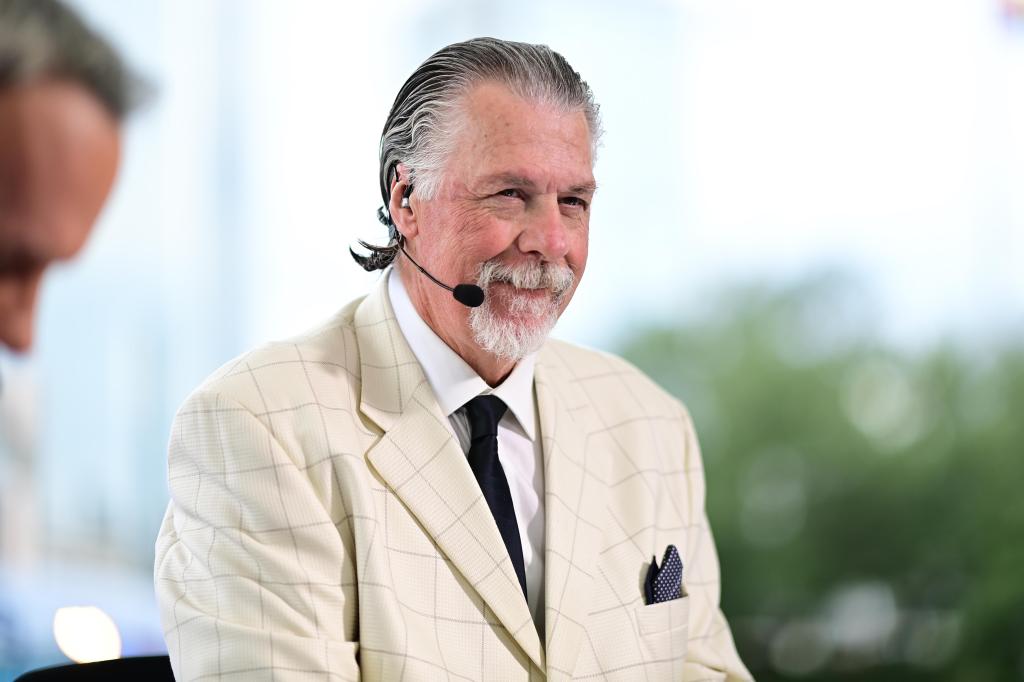
Barry helped to grow the game via ESPN and NHL Network dating back to 1996. He found his calling under the blinking red light of the camera and excelled in trailblazing his own style. He was honest, apologized for absolutely nothing and always stayed true to himself. The media could use more of these authentic characters.
Everyone in his orbit speaks highly of his patience, his compassion and his sheer love for hockey. It doesn’t matter what your background is or where you came from – if you enjoy hockey, you have a friend in Barry.
“Barry is a unique, one-of-a-kind person,” NHL commissioner Gary Bettman said. “And hockey on ESPN won’t be the same without him.”
“His love for hockey is obvious and infectious. And it is impossible to have a conversation with him without a smile on your face.”
ESPN
John Buccigross
My heart goes out to Barry, his family and his friends. I also feel for ESPN and the colleagues he’s spent decades making memories. Hockey coverage will never be the same. One of those colleagues is John Buccigross, chicken parm connoisseur, OT enthusiast and legend in his own right.
“I’ve worked with Barry at ESPN for over a quarter-century,” Bucci shared. “Cold beers and hearty laughs in smokey cigar bars. A razor sharp wit, he was always early and looked like a million bucks. I love him; I’ll miss him.”
X.com
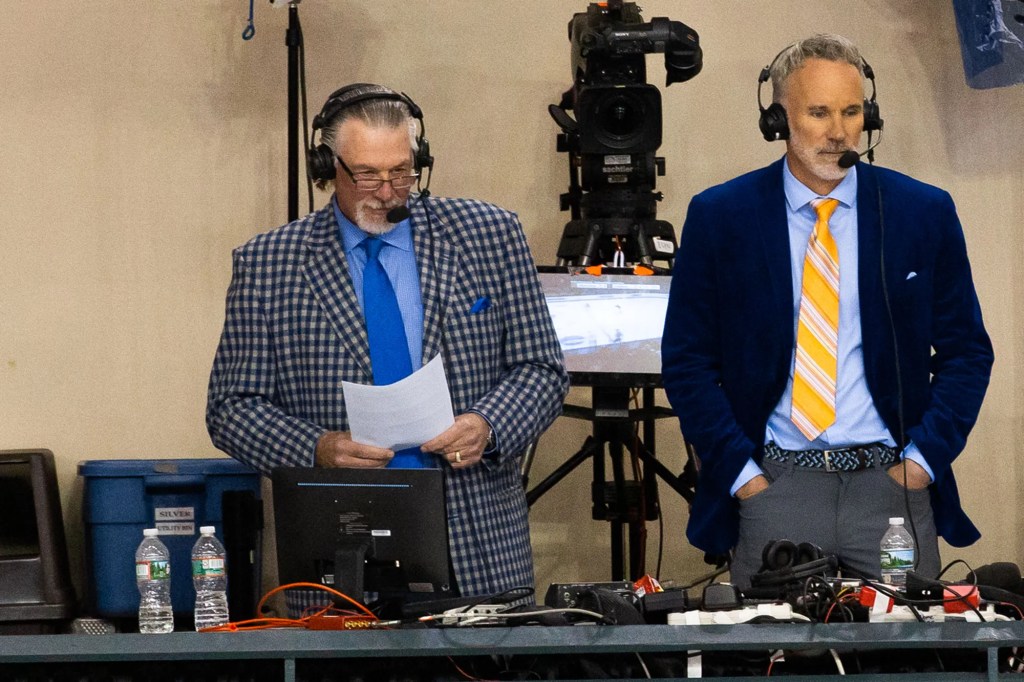
Bucci had the brilliant and beautiful idea to stand in solidarity with his long-time friend and stand up to Parkinson’s with a stylish yet simplistic t-shirt. All of the proceeds will go towards the Michael J. Fox Foundation for Parkinson’s Research.
Join me and countless others in pre-ordering Bucci’s shirt, dropping the gloves and fighting against Parkinson’s.
 geryblogs
Leave a comment